


Table of Contents
- Why Off-the-Peg Leather Falls Short on Stage
- What Performers Should Look for in Men's Leather Stagewear
- How to Commission Custom Leather Stage Outfits
- Made-to-Measure Leather Garments: Fit That Works Under Lights
- Leather Stagewear Care Between Shows
- Bespoke Leather Fashion for Stage Performers: Building a One-Off Look
- Conclusion
- Frequently Asked Questions
Last Updated: 9 October 2026
Why Off-the-Peg Leather Falls Short on Stage
Off-the-peg leather is cut for a crowd, not for a body under lights. That is the core problem with mass-produced stagewear, and it shows up the moment you move.
A rack-sized jacket is built around average measurements. Stage work is not average. You raise your arms, you turn, you sweat under hot lamps for an hour. Off-the-peg leather has no allowance for any of that. The shoulders pull, the waist gapes, and the whole garment shifts when you lift an arm.
Then there is the leather itself. Cheaper gear often uses split leather or bonded leather, which is glued fibre rather than a full hide. It cracks at stress points, and stage lighting exposes every flaw. Full-grain cowhide, by contrast, holds its shape and takes dye deeply.
At Spitfire Leather, we have dressed clubbers and performers who came to us after a cheap piece failed mid-run. The pattern was always the same: poor fit, thin leather, hardware that gave out.
- Fit: Rack sizes assume a static body, not a moving one
- Material: Split and bonded leather fail at seams and stress points
- Hardware: Light rivets and plated snaps corrode and pop
- Finish: Surface dye rubs off where the garment flexes most
The fix is not a bigger size. It is a garment cut for you.
What Performers Should Look for in Men's Leather Stagewear
Men's leather stagewear has to pass three tests: fit, movement, and durability under lights. Miss any one and the piece will let you down on stage.
Start with the hide. Full-grain cowhide is the benchmark. It is the outer layer of the skin, so it keeps its natural fibre strength. It scuffs less and ages better than corrected-grain leather.
Next, look at the build. Reinforced stitching at every stress point matters more than any decorative detail. Ask how the seams are finished and whether the hardware is nickel-plated rather than painted.
Movement comes third. A stage garment needs room across the back and shoulders. If you cannot raise both arms overhead without the hem lifting, the cut is wrong.
Finally, think about weight. Heavier leather looks bolder but traps more heat. For long sets under hot lamps, a mid-weight hide often works better than the thickest option on the shelf.
How to Commission Custom Leather Stage Outfits
Commissioning custom leather stage outfits follows a clear path: measure, brief, agree the spec, then wait for the build. The more precise you are at the start, the fewer surprises at the end.
The process usually runs in four stages:
- Measure at home or in person, with a second pair of hands
- Brief the maker on the look, the venue, and how you move
- Agree the spec in writing: hide, hardware, finish, timeline
- Fit and adjust once the piece arrives
A common mistake is treating this like ordering a shirt online. It is closer to having a suit made. You are buying a pattern built for your body, so the measurements carry the whole result.
What to Bring to Your Measurements Session
Bring a soft tape measure, a fitted base layer, and shoes you would wear on stage. Footwear changes your posture, and posture changes your measurements.
Ask someone to help. Measuring your own back, inside leg, and shoulder width is unreliable. A second person keeps the tape level and the numbers honest.
Have these figures written down before you start:
- Chest, waist, and hip circumference
- Shoulder width, seam to seam
- Back length, from nape to waist
- Arm length, shoulder to wrist
- Thigh and calf circumference for kilts and trousers
Add a note on how you move. If you raise your arms often, say so. The maker can add allowance where you need it.
Questions to Ask Before You Commit
Ask about the hide, the hardware, and the timeline before you pay a deposit. These three answers tell you most of what you need to know.
Put these questions to any maker:
- Which hide are you using, and is it full-grain?
- How is the hardware fixed, and will it corrode?
- What is the realistic build time?
- What happens if the fit is wrong?
- Can I choose the colour and finish?
A maker who cannot answer these plainly is a risk. You are commissioning a one-off piece, so clarity at the start protects you later.
Made-to-Measure Leather Garments: Fit That Works Under Lights
Made-to-measure leather garments solve the one thing off-the-peg cannot: movement. A pattern cut to your body keeps its shape when you raise an arm, turn, or bend.
The difference is in the allowance. A good maker adds room at the shoulder, back, and hip, not just the waist. That is where stage garments live or die. Too tight across the back and the jacket rides up. Too loose and it billows under the lights.
Weight matters here too. A mid-weight hide drapes better and moves with you, while very heavy leather can feel stiff until it breaks in. For a performer on stage for a full set, comfort is not a luxury. It is what keeps the look sharp from the first number to the last.
Our own couture pieces show how this works in practice. The Napolitan Kilt (short) is built from full-grain cowhide and dyed with Fiebing's professional leather dye for a deep finish. It uses grip-tight double cap rivets and heavy-duty nickel-plated hardware, so the build holds up to repeat wear. The Hermes Kilt follows the same approach, with reinforced stitching and a cut that keeps its line on stage.


Both sit in our couture range, which means limited runs rather than endless restocks. That matters if you want a look that stays yours.
Leather Stagewear Care Between Shows
Leather stagewear care between shows comes down to three habits: air it, wipe it, and store it flat. Do those and a good piece will outlast several cheap ones.
Sweat is the main enemy. It carries salt, and salt dries leather out over time. That is why the first day after a show matters more than any long-term routine.
After a Performance: The First 24 Hours
Hang the piece on a wide wooden hanger the moment you get home. Let it air in a cool, dry room, away from radiators and direct sun.
Then wipe the inside with a dry cloth. Pay attention to the collar, underarms, and waistband, where sweat collects. Do not use heat to dry leather. It pulls the oils out and leaves the hide stiff.
Once the piece is dry, condition it lightly. A small amount of leather conditioner, worked in with a cloth, keeps the fibre supple. Over-conditioning is worse than under-conditioning, so go easy.
Store kilts and trousers rolled or hung, never folded tight. Sharp folds become permanent creases in leather.
- Air for at least a day before storing
- Wipe the inside where sweat gathers
- Condition lightly, and rarely
- Store on a wide hanger or rolled loose
Bespoke Leather Fashion for Stage Performers: Building a One-Off Look
Bespoke leather fashion for stage performers is about building a look no one else can copy. That starts with a clear idea and ends with a piece cut only for you.
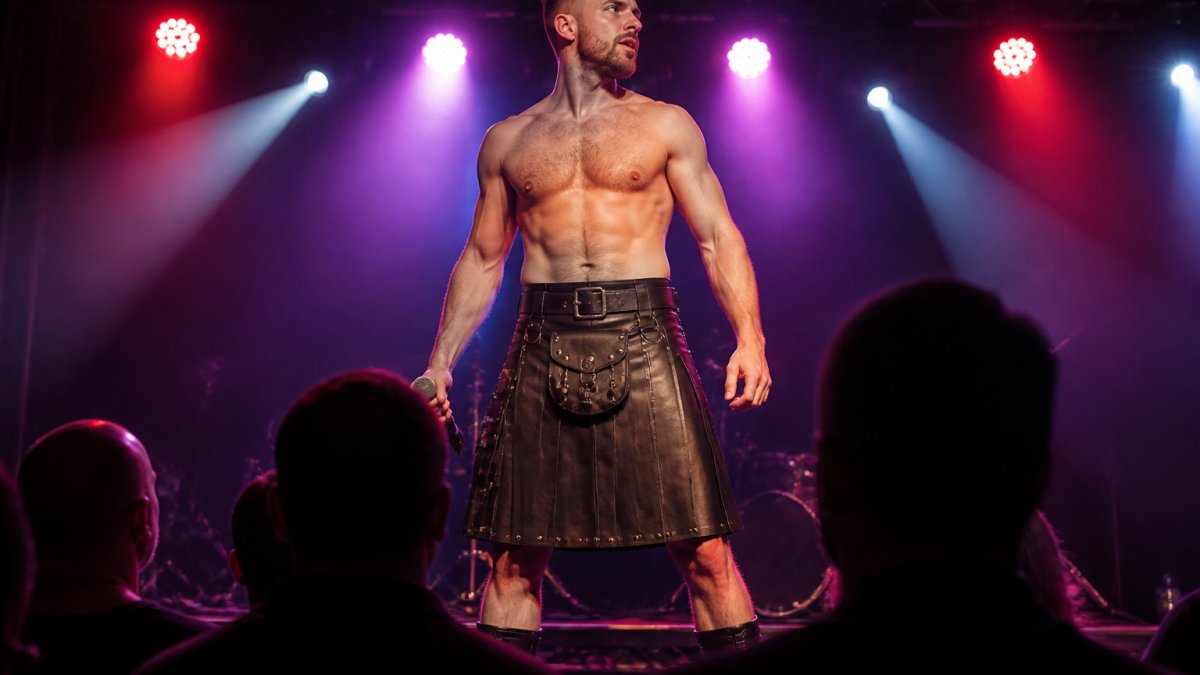
Think about the silhouette before the detail. A kilt reads differently from trousers under lights. Hardware catches the beam and draws the eye, so placement matters as much as size. Colour and finish decide how the leather behaves on stage: a deep matte hide absorbs light, while a polished finish throws it back.
Limited runs are what keep a look exclusive. When a design is retired, it stays retired. That is the point of commissioning rather than buying off a rack.
If you are new to the scene, you do not need a full outfit on day one. Start with one strong piece, wear it, and learn what you actually want. A single well-made kilt will do more for a look than three cheap items.
Conclusion
The hardest part of stage leather is not finding something bold. It is finding something that fits, moves, and lasts past a single season. Off-the-peg gear rarely manages all three, and that is where a made-to-measure piece earns its place.
At Spitfire Leather, we build limited-edition couture and bespoke made-to-measure garments for performers and clubbers. Every design is unique, runs in small numbers, and is retired once it sells through, so you own something genuinely yours. Our pieces use full-grain cowhide, reinforced stitching, and heavy-duty nickel-plated hardware, and they are worn by fans of BLUF and Tom of Finland, plus contestants at IML and MAL.
Get started with Spitfire Leather and commission a stage look built around your body, not a size chart.
Frequently Asked Questions
How long does a bespoke leather stage outfit take to make?
Timelines vary by design complexity, but plan around several weeks from measurement to delivery. If you have a fixed event date, tell the maker upfront so they can confirm whether it is achievable. For IML or MAL, start the conversation months ahead. A made-to-measure kilt with standard detailing will move faster than a fully custom piece with unusual hardware, panelling or a new pattern drafted from scratch.
What type of leather is best for performance clothing?
Full-grain cowhide is the usual choice for structured stagewear because it holds its shape and resists wear. Ask the maker how the hide is dyed, since a professional dye job affects how the colour holds up under hot stage lights.
Can bespoke leather clothing be made to measure for unusual body shapes?
Yes, that is the main reason to commission rather than buy off the peg. Made-to-measure leather garments are drafted to your measurements, so athletic thighs, a longer torso or broad shoulders are accounted for rather than squeezed into a standard size. If previous made-to-measure purchases fit badly, say so at the measurement stage and explain exactly where. A good maker will adjust the pattern, not just size up.
How do you care for leather costumes after a performance?
Wipe the garment with a dry cloth to remove sweat and surface grime, then let it air away from direct heat. Never store leather damp or sealed in plastic, as trapped moisture damages the finish. Condition the leather a few times a season to stop it drying out and cracking. Check rivets, hardware and stitching regularly, since these take the most stress during a show. Store on a wide hanger or folded flat with padding at the creases.


